
Every show comes together a little differently.
Some are fully built before anyone steps on site, with every moment mapped, every transition defined, and every element aligned and confirmed in advance. Others take shape in the room, where the structure exists but the details continue to evolve through rehearsals. Both approaches are valid, and both are used every day in live event production. The difference lies in how the show is built, how decisions are made, and what is prioritized along the way.
For more complex productions, particularly multi-screen general sessions, our preference is to arrive with the show largely complete. This means content has been finalized, everything has been programmed, and the interaction between audio, video, and lighting has already been designed. At that point, the show is no longer a collection of separate elements, it’s one single integrated system. In the best cases, it functions as simply as pressing play, with each moment unfolding exactly as it was designed.
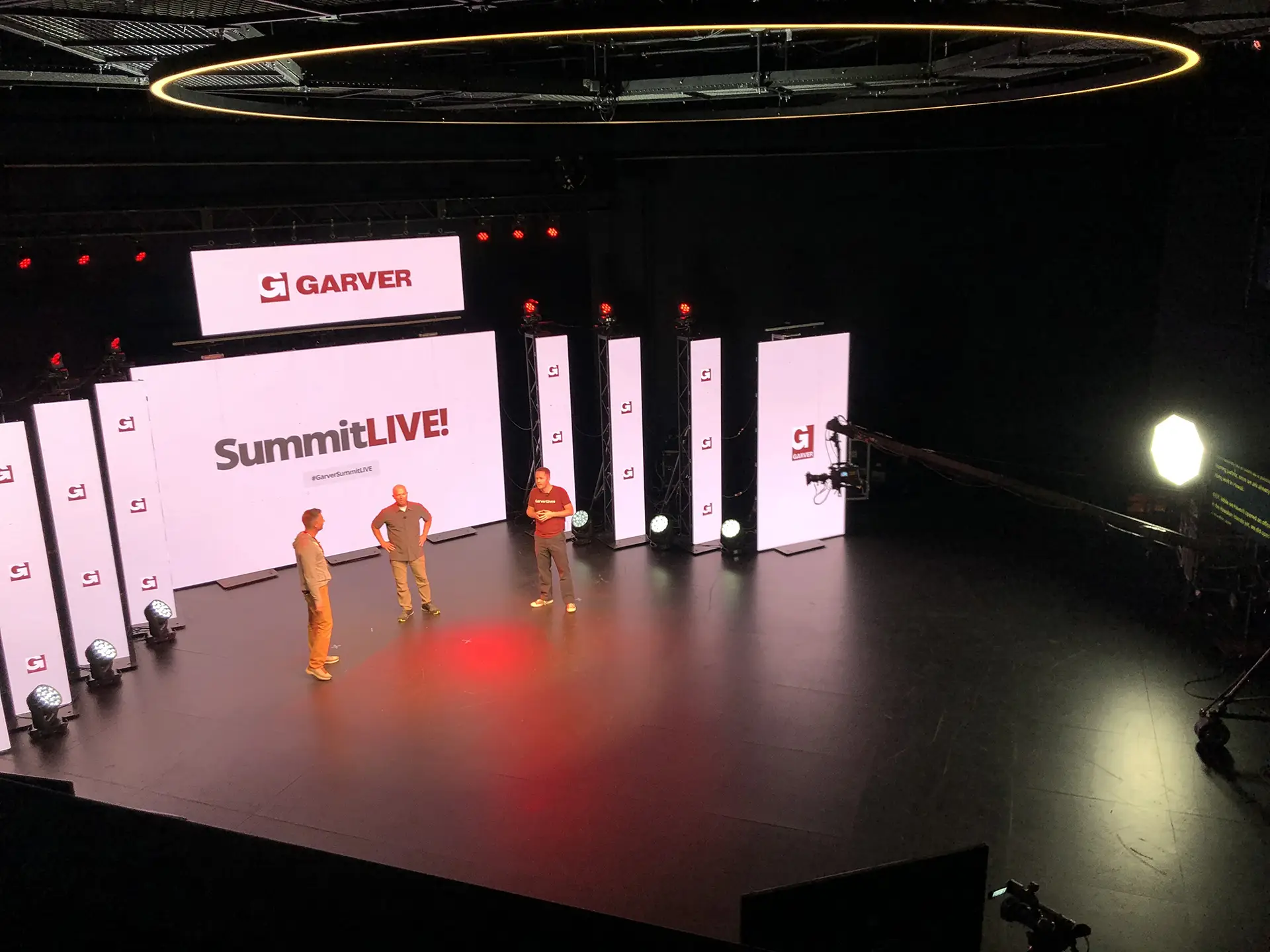
This level of preparation is what we mean by pre-programming. It is not about overbuilding or adding unnecessary layers. It is about removing uncertainty. By resolving decisions in advance, the team is not spending valuable time onsite trying to piece together the experience. Instead, the focus shifts to refinement, to small adjustments that elevate what is already working. The result is a show that feels cohesive to the audience and steady behind the scenes.
That amount of preparation, however, requires commitment. Content needs to be ready earlier. Decisions need to be made quickly and held. When every element is connected, even small changes can carry a wider impact. A single adjustment may require coordination across multiple parts of the system. It is a more controlled process, but one that depends on early alignment between the client and the production team.
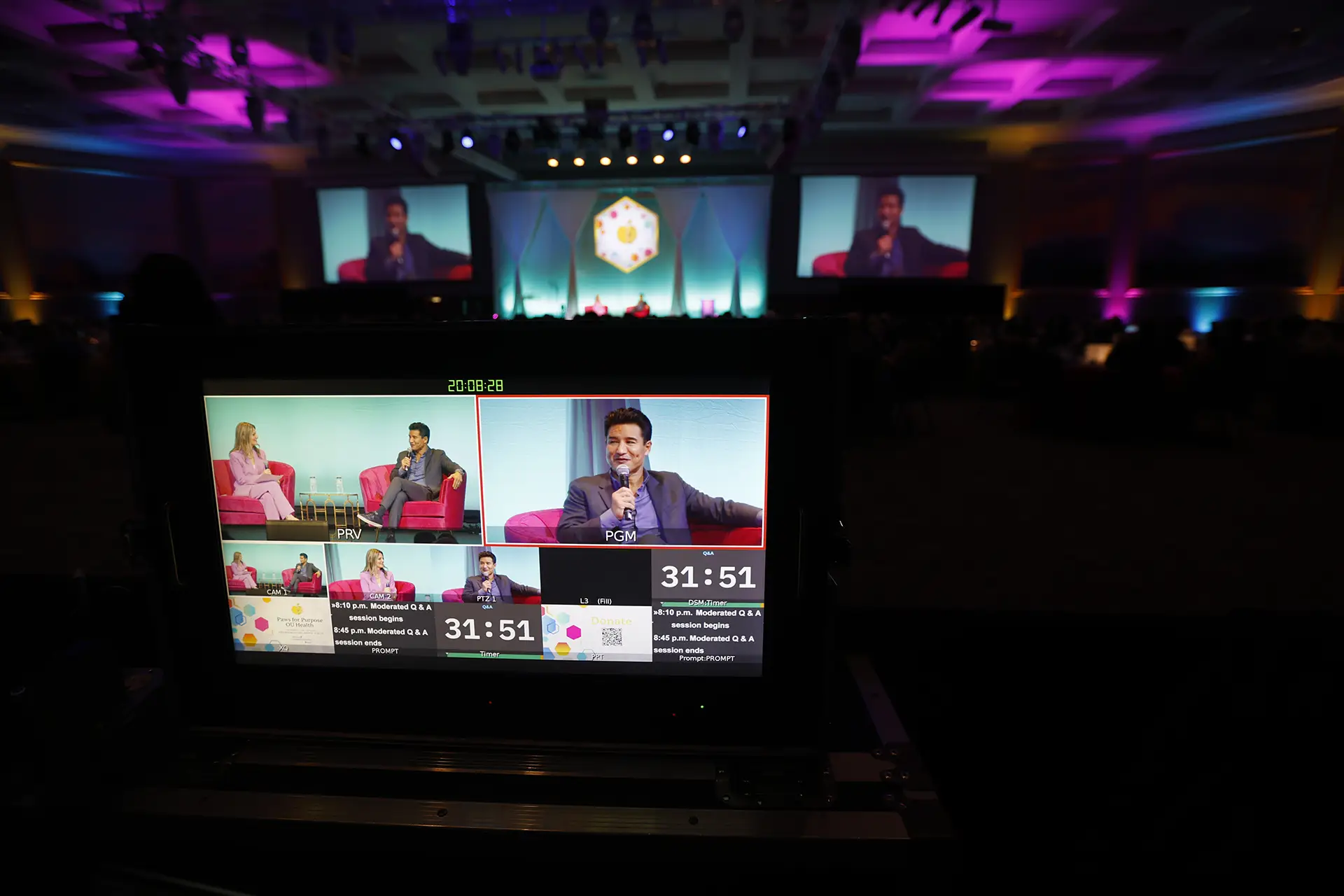
When that’s not all possible, the show naturally moves toward a more modular approach. The structure remains in place, but elements are built to operate more independently. Content can be adjusted closer to show time, presenters have more room to refine, and changes can be made without affecting the entire system. This creates a different kind of strength. It allows the production to remain flexible and responsive, particularly in environments where content is still taking shape.
The tradeoff is in how the show feels, the day of, as a whole. Because elements are less interconnected, the level of precision across transitions, timing, and departmental integration is more limited. The show works, and it can still be effective, but it is less tightly orchestrated and the overall experience becomes more about adaptability than cohesion.
Strong production companies understand both approaches and know when each is appropriate. Some moments benefit from being fully designed and executed with high precision. Others require space to adjust in real time. The goal is not to force one method onto every show, but to build a process that supports both, allowing for intention where it matters and flexibility where it is needed.